Introduction: The Hidden Threat in Nucleic Acid Analysis
In molecular biology, the accuracy of RNA and DNA analysis is paramount. Yet, one often-overlooked challenge persists: microbial contamination. Bacterial, fungal, or environmental DNA/RNA can skew results, leading to false positives, failed experiments, and costly repetitions.
Modern laboratories require next-generation solutions to detect, prevent, and eliminate contamination without compromising workflow efficiency. This article explores:
- How microbial contamination affects RNA/DNA analysis
- Traditional vs. next-gen detection methods
- SPT Labtech’s automated solutions for contamination control
- Best practices for maintaining contamination-free workflows
By integrating advanced instrumentation, AI-driven analytics, and automated sample handling, labs can now achieve unprecedented levels of accuracy in nucleic acid research.
1. The Impact of Microbial Contamination in Molecular Biology
1.1 How Contamination Occurs
Microbial contamination can enter samples through:
- Environmental exposure (airborne bacteria, lab surfaces)
- Cross-contamination (improper pipetting, shared equipment)
- Sample extraction errors (incomplete lysis of host cells)
1.2 Consequences of Contaminated Samples
- False NGS results (misinterpretation of metagenomic data)
- Failed PCR amplification (due to bacterial DNA interference)
- Compromised drug development (invalidated biopharma QC)
1.3 Case Study: When Bacterial DNA Skewed a Cancer Genomics Study
A 2023 study in Nature Methods found that 15% of published RNA-seq datasets contained detectable microbial contaminants, leading to erroneous biomarker identification.
2. Traditional Contamination Detection Methods (and Their Limitations)
| Method | Pros | Cons |
|---|---|---|
| Gel Electrophoresis | Low cost, visual detection | Low sensitivity, can’t identify species |
| qPCR with 16S rRNA Primers | Specific for bacteria | Misses fungi/viruses, requires prior knowledge |
| Microbial Culture | Confirms viability | Slow (days to weeks), biased toward culturable species |
Key Limitation: Most traditional methods are reactive (detect contamination after it occurs) rather than preventive.
3. Next-Gen Solutions: How Modern Tech is Solving Contamination
3.1 Automated Nucleic Acid Extraction with SPT Labtech
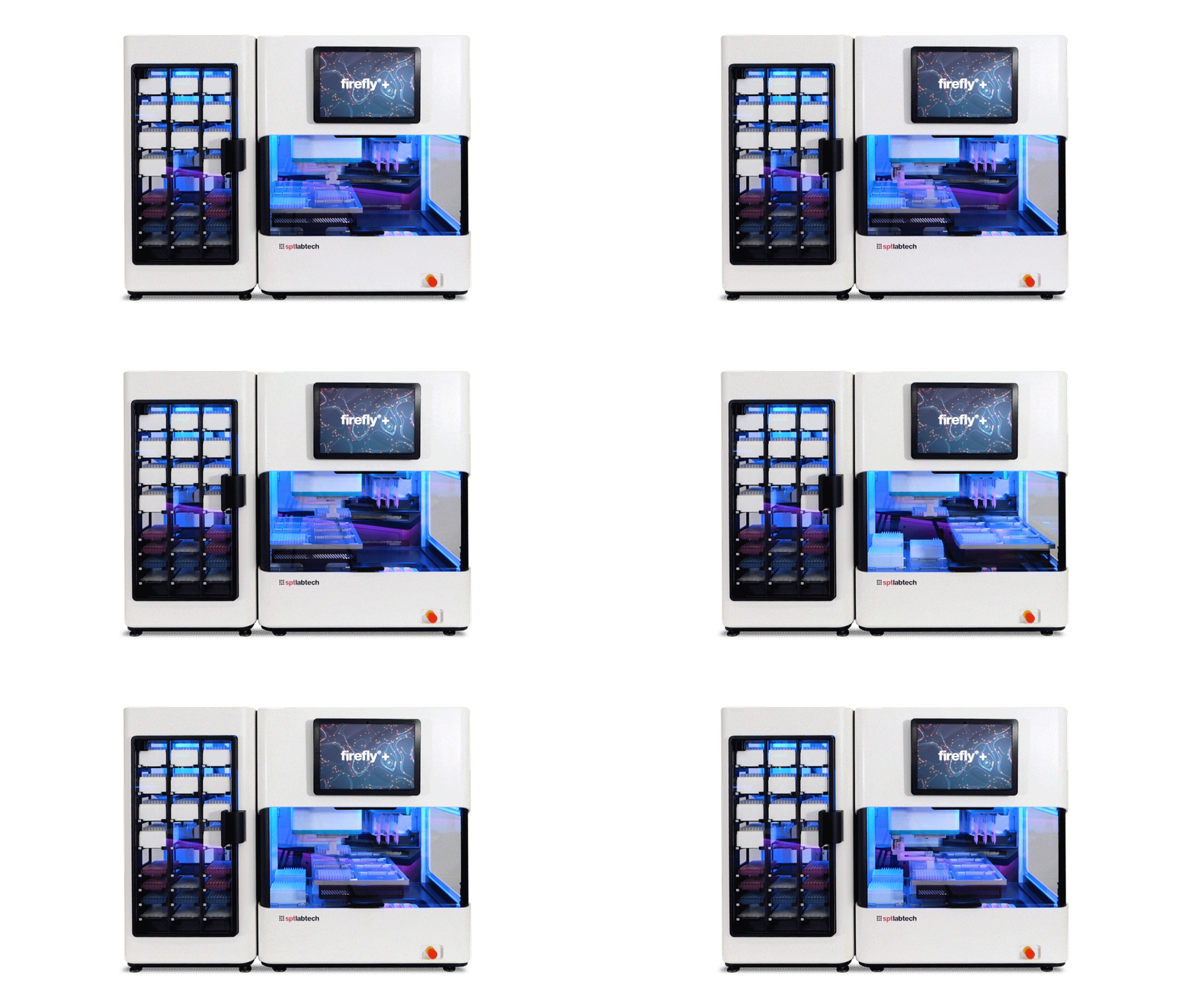
SPT Labtech’s firefly® and mosquito® systems integrate:
- UV decontamination cycles between samples
- Positive displacement tips to prevent aerosol carryover
- On-board QC checks for microbial signatures
Result: Up to 99.9% reduction in cross-contamination risk.
3.2 AI-Enhanced Contamination Screening
Machine learning algorithms (e.g., Kraken, Centrifuge) can:
- Flag microbial reads in NGS data in real-time
- Distinguish contaminants from legitimate host-microbiome signals
3.3 Digital PCR (dPCR) for Absolute Quantification
Unlike qPCR, dPCR partitions samples into nanodroplets, allowing:
- Detection of 1 bacterial genome copy in 10,000 host cells
- No reliance on reference databases
3.4 Lab Automation & Closed-System Workflows
Robotic liquid handlers (e.g., SPT Labtech’s dragonfly®) minimize human intervention, reducing:
- Touchpoints where contamination enters
- Variability in manual pipetting
4. Implementing Contamination Control: Best Practices
4.1 Pre-Lab Prep
- Use UV-irradiated workstations
- Filter pipette tips with aerosol barriers
4.2 During Extraction & Amplification
- Include negative controls in every run
- Use duplex assays (e.g., host + microbial targets)
4.3 Post-Analysis
- Bioinformatic filtering (tools like DeconSeq, KneadData)
- Regular equipment decontamination (hydrogen peroxide vapor)
5. The Future: Where Contamination Control is Headed
- Single-cell RNA-seq with microfluidics (isolates cells pre-lysis)
- Nanopore sequencing for real-time contaminant detection
- Blockchain for sample tracking (ensures chain of custody)
Conclusion: Precision Starts with Purity
Microbial contamination is no longer an unavoidable nuisance—it’s a solvable challenge. By adopting SPT Labtech’s automated systems, AI-driven QC, and closed workflows, labs can ensure the integrity of their nucleic acid data.